

For as long as business seminars and self-help books have existed, we have been told a fundamental lie: that knowledge is power. We are conditioned to believe that if we just read one more book, attend one more conference, or collect one more data point, we will finally have the leverage required to change our lives or our businesses.
John Chmela, a man who has spent over thirty years navigating both the highs of tech innovation and the lows of personal recovery, knows better. He has seen countless entrepreneurs drown in a sea of information while remaining completely paralyzed when it comes to action.
“Information is not power,” Chmela says. “The execution of knowledge is power. If information were enough, everyone with a library card would be a billionaire. The bottleneck has never been a lack of ideas; it’s been the exhaustion and the cost associated with carrying those ideas out.”
With the advent of artificial intelligence, Chmela believes we have reached a historic turning point. For the first time in human history, the gap between having an idea and executing it is shrinking to near zero.
The Weight of the Execution Gap
In the traditional business world, execution is expensive. It requires hiring teams, managing personalities, and navigating weeks or months of manual labor to see if a concept even works. This “execution gap” is where most great ideas go to die. An entrepreneur might have a brilliant insight, but when they realize it requires a hundred hours of research or a complex software build, the friction becomes too high, and the idea is shelved.
Chmela’s “Applied AI” philosophy is built on the premise that AI is the first tool in history that specifically targets this friction. It doesn’t just give you more information—we already have too much of that. Instead, it provides the “muscle” to act on the information you already have.
He points to his own daily habit as an example. Chmela writes LinkedIn articles every single day and hosts free AI training sessions at noon. He isn’t just sharing theories; he is demonstrating real-time execution. He takes complex business blueprints—the kind that used to take a team of analysts weeks to unpack—and uses AI to reverse-engineer and execute them in minutes.
The Warren Buffett Test
To illustrate the power of execution over information, Chmela often uses the example of Warren Buffett. For decades, Buffett’s “information” has been public. Anyone can read his annual reports or study his value-investing philosophy. But very few people can replicate his success because the execution of that philosophy requires a level of disciplined, grueling research that most humans simply cannot sustain.
“Buffett spends an enormous amount of time in research to decide who he’s going to invest in,” Chmela explains. “The stuff he would spend months or even years on, we can do in milliseconds today with the right AI prompting and agents. The knowledge hasn’t changed, but the speed of execution has changed everything.”
By automating the “grunt work” of research and analysis, AI allows the modern entrepreneur to operate with the analytical depth of a legendary investor without the decades of manual labor. It closes the gap between the strategy and the result.
Vibe Coding and the Death of Technical Barriers
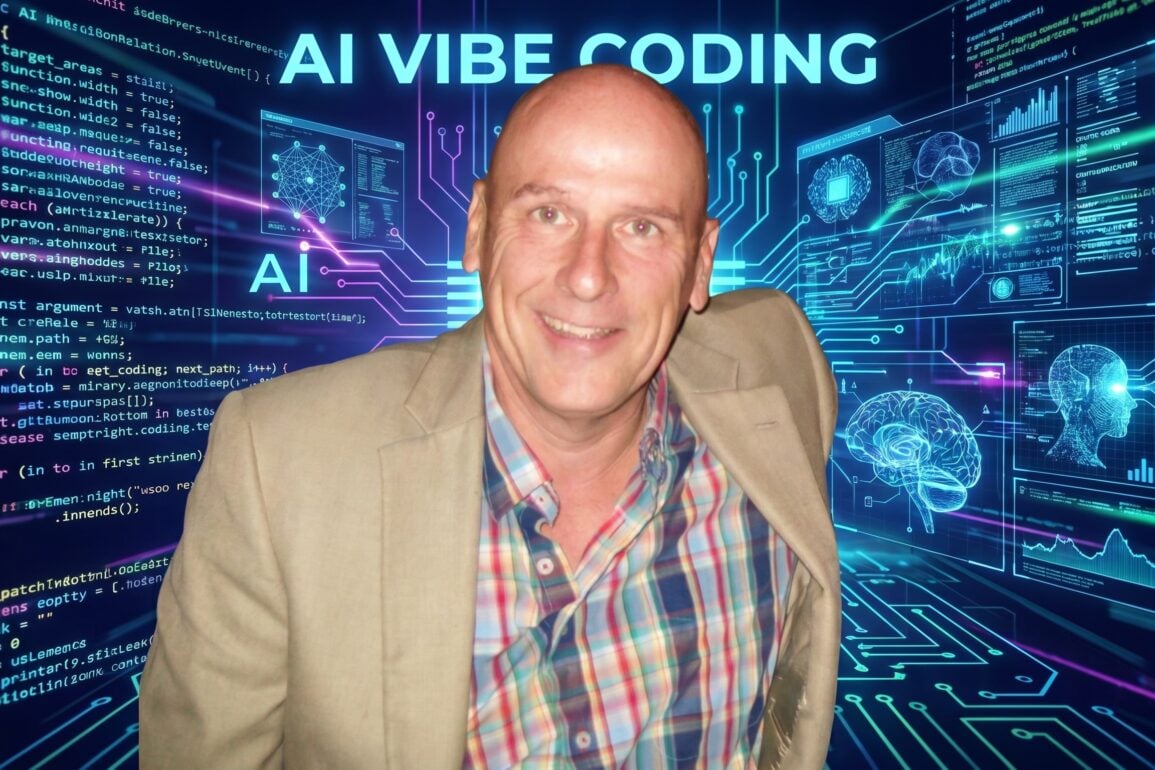
One of the most significant shifts Chmela has observed is the transition from traditional programming to what he calls “vibe coding.” In the past, if you wanted to execute a technical idea, you had to speak the language of machines. You had to be a coder or have the capital to hire one. This created a massive barrier for visionaries who didn’t have a technical background.
Today, the language of execution is natural language. If you can describe what you want to build with clarity and “vibe,” the AI can handle the technical translation.
“I consider myself very well versed in prompting and vibe coding,” Chmela says. “It’s about the application. I’m writing software today that I first developed eleven years ago, but I’m doing it at a speed and a scale that was unimaginable back then. The barrier to entry isn’t your ability to code anymore; it’s your ability to clearly define what you want to achieve.”
From Recovery to Radical Implementation
Chmela’s obsession with execution isn’t just professional; it is deeply personal. As a man who has been in recovery for thirty three years, he understands that in the world of addiction, “knowing” you need to change is worth nothing without the “doing” of the steps.
He has brought that same radical accountability to his work in AI. While others are debating the ethics or the far-off risks of the technology, Chmela is focused on how it can be used today to solve immediate problems. Whether it is helping veterans break the “90-day clock” of isolation on his horse farm or helping a small business owner automate their lead generation, his focus is always on the move from thought to thing.
He gives away his AI training for free every day because he wants to remove every possible excuse for inaction. He believes that if he can show people how easy the execution has become, they will finally stop hiding behind the “need for more information.”
The New Economic Reality
As we move further into the AI era, the market will increasingly stop paying for what you know and start paying exclusively for what you can get done. We are entering an era of the “Individual Enterprise,” where a single person’s ability to execute is more valuable than a large corporation’s ability to plan.
John Chmela’s message to leaders and entrepreneurs is a sobering one: the era of the “informed observer” is over. You can no longer afford to sit on the sidelines and wait for the perfect amount of data before you act. The tools to execute at a world-class level are already in your hands.
“The AI power-up is a no-brainer,” Chmela says. “It’s taking the best blueprints in the world and leveling them up so you can do them faster, cheaper, and better. We have all the information we need. Now, it’s time to start building.”
On his farm in Kentucky, between the horse shows and the veteran retreats, Chmela continues to push the boundaries of what a single human can execute when they stop collecting data and start applying it. He is proving, one daily article at a time, that the gap is finally closed.